Halftones
LPI (Lines Per Inch)
LPI (lines per inch) measures how fine or coarse a halftone's dot grid is, and screen printers typically run 45 to 65 LPI versus offset printing's 150-plus.
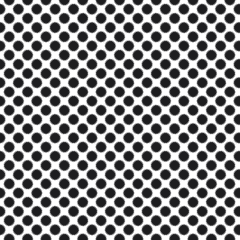
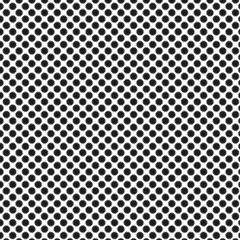
LPI, or lines per inch, sets how many rows of halftone dots pack into each inch of a printed image — the higher the number, the finer and less visible the individual dots. Screen printing typically runs 45 to 65 LPI because fabric texture and screen mesh can't resolve much finer without dots clogging or blowing out, while offset printing on paper commonly runs 150 LPI or higher for the same image.
For a buyer, LPI is why a photo-based design looks razor sharp on a business card but slightly soft or dotty up close on a shirt — it's not a lower-quality file, it's a different physical medium with a coarser practical ceiling. We've had customers zoom into a proof at 400 percent worried about visible dots that vanish completely at three feet, which is the only distance a worn shirt actually gets viewed from.
Pros match LPI to both the mesh count on the screen and the fabric underneath — a rule of thumb is mesh at roughly four to five times the LPI number — and drop to a coarser 45 LPI on textured fleece or heavy poly blends where finer dots would just clog, while pushing toward 55 to 65 LPI on smooth ringspun cotton that can hold the detail.
The common mistake is assuming a higher LPI is always better, the way more megapixels sounds like a better camera. Push LPI too high for the mesh and fabric and dots start dropping out or filling in entirely, turning a crisp gradient into mud instead of the fine detail the higher number promised.