Halftones
AM Halftone
An AM halftone builds tone by varying dot size on a fixed grid at a fixed angle, making it the default screening method for printed apparel.
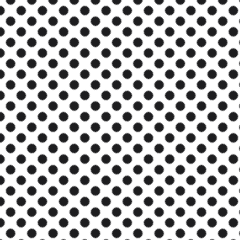
An AM halftone — amplitude modulated — locks every dot onto a rigid grid at a fixed angle and varies exactly one thing: how fat the dot is. At 55 LPI the cells sit 0.018 inch apart, so a 10% highlight dot is a speck inside its cell while an 80% shadow dot nearly fills it and touches its neighbors. Apparel screening lives between 35 and 65 LPI, with 45-55 LPI on 230-305 mesh covering most simulated-process work. Single-color jobs usually sit at 22.5 or 52.5 degrees; four-color process splits to yellow 0, cyan 15, black 45, magenta 75.
That fixed grid is why AM halftone is the default on nearly every shirt with a gradient in it. A photo on a chest print, a fade under a logo, a distressed texture: all of it is dots doing the work of colors nobody paid for. We killed a 250-piece run of navy hoodies when a separator angled all six screens at 45 degrees and the stacked plates read as a plaid you could spot from across the shop. The dot shape was fine. The angles were not.
Pros pick line count from mesh first, never from the artwork. Divide mesh by LPI and you want 4:1 or better. 230 mesh at 55 LPI is 4.2 and prints; 156 mesh at 55 LPI is 2.8 and turns highlights to mush. The trade-off is real: finer screening gives a smoother ramp up close, but each dot carries less ink, gains harder on press, and dies faster on textured fabric.
The complaint that lands most often is that a photo print looks speckled or faded up close. That texture is the AM halftone grid doing its job — a 30% tone is 30% coverage, and the exposed fabric between dots is the design. Asking for a photo with no visible dots means separating it into eight solid spot colors: a different quote, not a better printer.