Halftones
Halftone
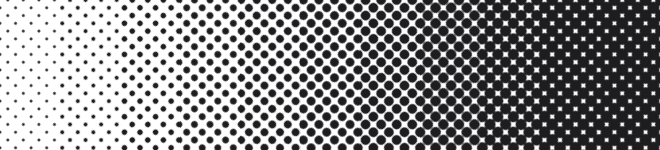
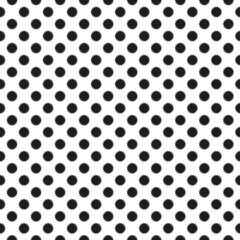
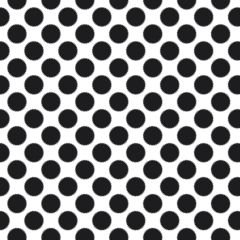
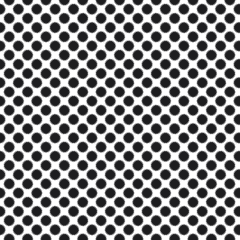
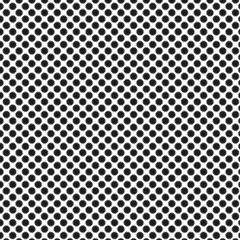
Halftone printing uses a grid of dots that vary in size, usually 45 to 65 lines per inch, to fake shading and gradients using one ink color.
Halftone printing breaks a solid tone into a grid of dots that change size and spacing instead of hue: bigger, closer-together dots read as darker, small sparse ones read as lighter, and the eye blends them into a smooth gradient from normal viewing distance. On shirts, that dot grid typically runs 45 to 65 lines per inch (LPI), far coarser than the 150+ LPI standard in offset printing, since fabric texture and a screen's mesh openings can't hold anything finer without dots clogging together or blowing out. The pattern gets generated in RIP software or built into the film positive, then burned onto the screen as the actual dot-shaped stencil.
For a buyer, this technique is what puts a faded black-and-white photo or a soft drop-shadow on a concert tee using one ink color, instead of paying for three or four extra spot colors to fake the same shading. We've run single-screen portraits built entirely from dot density that read like a full grayscale photograph once they hit the press, no gray ink involved, just spacing and size doing the work.
Pros size a halftone's dot frequency to the mesh count on the screen, generally keeping mesh at 4 to 5 times the LPI so each dot gets enough open area to hold ink cleanly. A coarser 45 LPI grid survives better on textured fleece or heavier poly-blends, while 55-65 LPI reads sharper on smooth ringspun cotton where the weave won't swallow fine dots.
The most common mix-up: buyers hear the word and assume full color comes with it. It doesn't; a halftone still prints in one ink, just at varying dot sizes. A photorealistic, multicolor image means stacking several halftoned spot colors together, which is what simulated process and four-color process actually do.