Screen Printing
Four-Color Process (CMYK)
Four-color process printing overlays cyan, magenta, yellow, and black halftone screens to reproduce full-color photos, working best on white or light garments.
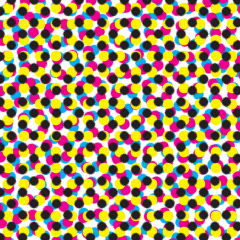
Four-color process, also called CMYK printing, separates a full-color image into four halftone screens, cyan, magenta, yellow, and black, each printed at a slightly different angle so the overlapping dot patterns don't collide into a moire pattern. Because the four process inks are semi-transparent, layering them at different dot densities reproduces millions of apparent colors using just four screens instead of eight or nine custom spot colors.
For a buyer, this is the budget-friendly route to putting a real photograph or full-color art file on a white Gildan 5000 or an ivory heather tee, four screens and four passes rather than the higher screen count simulated process needs. The tradeoff shows up fast on dark fabric: since the inks are translucent, garment color bleeds through and muddies the image, which is exactly why shops reserve this method for white and light-colored shirts only.
Pros spec four-color process almost exclusively for orders on light garments where a client supplied a photograph rather than vector art, and switch to simulated process the moment the base shirt gets dark or the design calls for punchy, opaque color.
A frequent misunderstanding: buyers request four-color process on a black hoodie expecting the same vibrant result they've seen on a white tee. Correct that up front, since translucent process ink simply can't fight through dark fibers the way an opaque simulated-process build can.