Screen Printing
Simulated Process
Simulated process printing reproduces photorealistic, full-color art on any shirt color using opaque, halftoned spot-color inks over a white underbase.
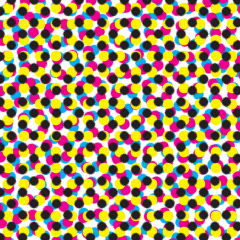
Simulated process (often shortened to "sim process") builds a photorealistic image from a curated palette of 6 to 10 spot colors, each one halftoned and printed in careful register, rather than relying on the four transparent CMYK inks used in true process printing. Most jobs start with a white or light gray underbase on dark garments, add a highlight white to punch up bright areas, and often finish with a shadow black to carry the deepest tones, all stacked and trapped so the halftone dots don't collide into moire.
This is the method that gets a band's tour art or a photo-realistic portrait onto a black Gildan 5000 or navy Bella+Canvas 3001 looking genuinely vivid rather than washed out, because opaque spot inks sit on top of the underbase instead of trying to shine through dark fabric the way CMYK does. We've separated album covers into nine screens where the client swore the shirt looked more saturated than the original artwork file.
Expect more setup cost than a basic 2-color logo, since every custom separation and screen adds burn time and registration risk. It's worth it specifically for detailed, photographic art that needs to survive on any garment color, not for simple logos or type.
The common mix-up: buyers assume this is the same as "four color process" or CMYK. It isn't. Simulated process is built from opaque custom colors and works on dark shirts; CMYK only works well on white or light garments.