Halftones
Grayscale Halftone
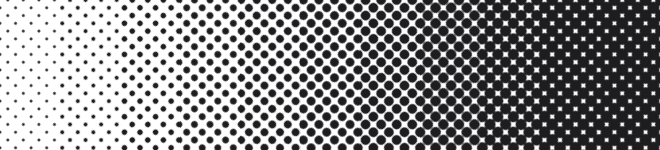
A grayscale halftone reproduces a photograph in one ink, using dot size alone to imply every tone between the garment color and solid coverage.
A grayscale halftone puts a photograph on a garment with one screen and one ink, letting dot size alone carry every tone. On textile the screen sits at 22.5 degrees — 45 is the paper and offset convention, and it fails on mesh because a 0/90 thread grid carries its own hard diagonal at 45 and beats against the dots. Some shops use 52.5; either one dodges the weave. Frequency runs 45 to 65 lpi over 230 to 305 mesh. No gray ink exists anywhere in the process. Black plastisol at 30% coverage reads as gray because the shirt shows through between dots; reverse it and white ink at 30% on a black tee reads as soft charcoal.
Cost is the honest argument. One screen, one setup fee, one squeegee pass, against six to eight screens for a simulated process build plus separation labor that starts around $150. For memorial shirts, band merch, and reunion tees, a grayscale halftone gets the photograph on fabric for a fraction of the price and runs faster on press, which matters when the order is 60 pieces and the deadline is Friday.
The craft is choosing the garment as your white. White ink on a charcoal tee gives soft mid-grays and genuinely bright highlights; the same file in black ink on that charcoal shirt has almost nowhere to go. Convert to grayscale, compress into a 10-85 band, sharpen after compressing rather than before, and pick lpi from mesh count instead of taste. The trade-off is obvious: no color, and some images die without it.
Buyers hear grayscale and picture muddy gray ink. The print is one opaque ink everywhere it lands, full strength, and the grays are entirely optical, manufactured by spacing. Put any grayscale halftone under a loupe and there is no gray in it at all.